The U.S. federal government faces a growing imperative to modernize systems and services using AI. Federal agencies are actively seeking pathways to integrate AI while preserving oversight, mission alignment, and public trust.
Understanding Agentic AI
Agentic AI, which refers to AI systems capable of initiating and executing tasks on behalf of users, offers potential across public sector operations. However, adoption should not be perceived as a binary shift from human to machine. Agency leaders should understand agentic capability as a continuum. This article explores the five degrees of agentic engagement, grounded in Gartner’s model, and a framework for incremental and ethical adoption.
Agentic AI is not a one-size-fits-all solution.
The Spectrum of Agentic Engagement
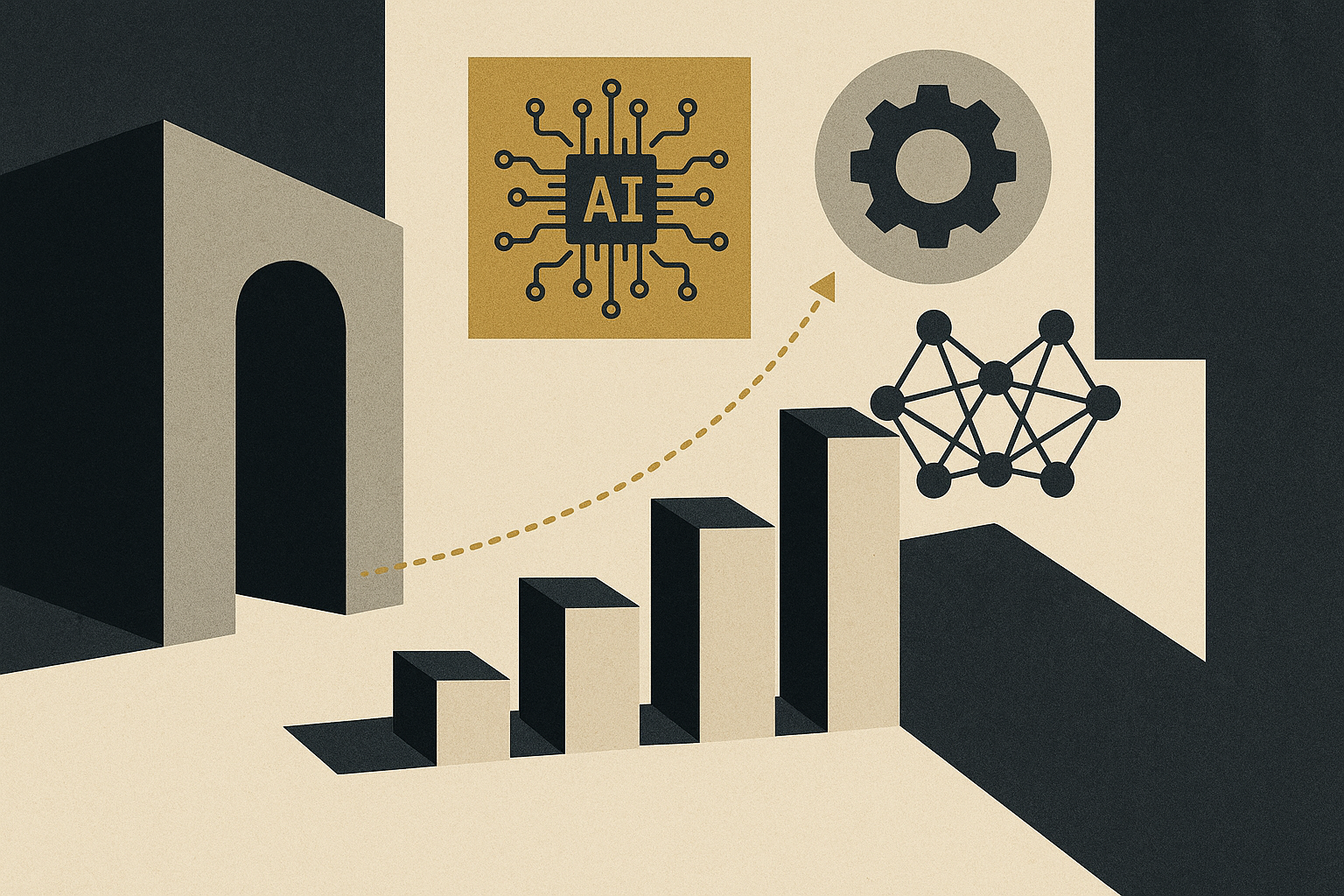
According to Gartner’s 'Degrees of Agentic Engagement' model, AI systems can operate at varying levels of autonomy. These range from passive tools that generate insights to fully autonomous systems capable of independently executing complex workflows. Understanding this spectrum is critical for government agencies designing AI strategies that align with oversight, transparency, and operational constraints.
Example: FOIA dashboards that present document search results, requiring human agents to interpret and act on findings.
Strategic AI Adoption
Understanding these degrees of agency allows leaders to strategically plan their AI adoption based on organizational maturity, policy constraints, and mission-critical needs. Agencies are not expected to leap from advisory to autonomous overnight. Rather, adopting assistive or advisory-level agents can drive significant gains in productivity, consistency, and decision support while remaining aligned with existing governance frameworks like the DHS AI Playbook.
The Assistive Level: A Pragmatic Entry Point
The assistive level represents a pragmatic entry point for agencies pursuing AI adoption. At this stage, AI tools help manage complexity and scale without ceding authority or violating governance protocols. For many federal agencies, this level offers an ideal balance: automation of rote tasks without compromising human oversight.
From an operational standpoint, assistive AI helps federal employees process large volumes of information more efficiently and with greater accuracy. For example, in environmental regulation, AI can analyze geospatial data to identify at-risk areas, helping experts prioritize inspections. In veterans’ services, large language models can assist in drafting benefit explanations tailored to individual cases.
Assistive AI offers a practical, impactful, and ethically sound path forward for federal missions.
Human-in-the-Loop (HITL) Design
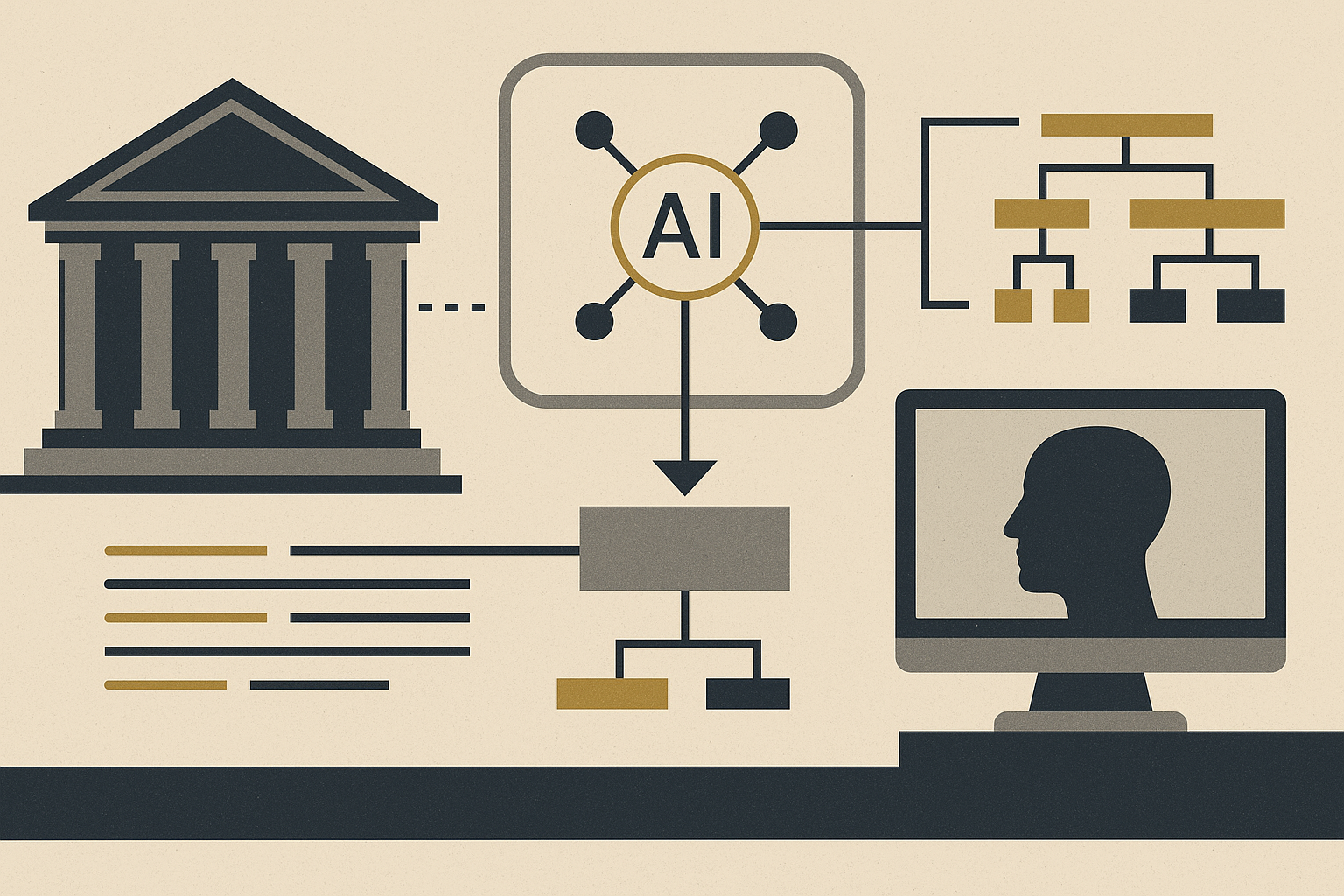
HITL design is central to ensuring that AI applications operate responsibly and align with public interest in high-stakes environments like federal governance. At the advisory and assistive levels, HITL provides a framework where human oversight is maintained over AI-supported actions, ensuring interpretability, accountability, and value alignment.
For instance, consider an IRS application where machine learning systems are used to identify potential tax discrepancies. These agents might flag returns with abnormal deductions, but trained IRS personnel still make the final determination. This preserves fairness while enabling efficiency. Similarly, in immigration case management, AI may extract and summarize complex case histories, but immigration officers use this data as one input among many in their decision-making process.
Assessing Organizational Readiness
As federal agencies consider adopting more capable agentic systems, assessing organizational readiness becomes essential. Four key dimensions serve as readiness indicators:
-
Policy alignment
-
Technological infrastructure
-
Workforce capability
-
Governance frameworks
Overcoming Adoption Barriers
Despite its promise, the adoption of agentic AI in federal environments faces significant barriers. Adoption is slowed by several key inhibitors:
-
Budget constraints
-
Resistance to change
-
Data privacy concerns
-
Integration with legacy systems

Future Impact of Agentic AI
According to Gartner’s Impact Radar, agentic AI will have a very high impact within the next three to six years, but realizing this impact will take sustained investment and change management.