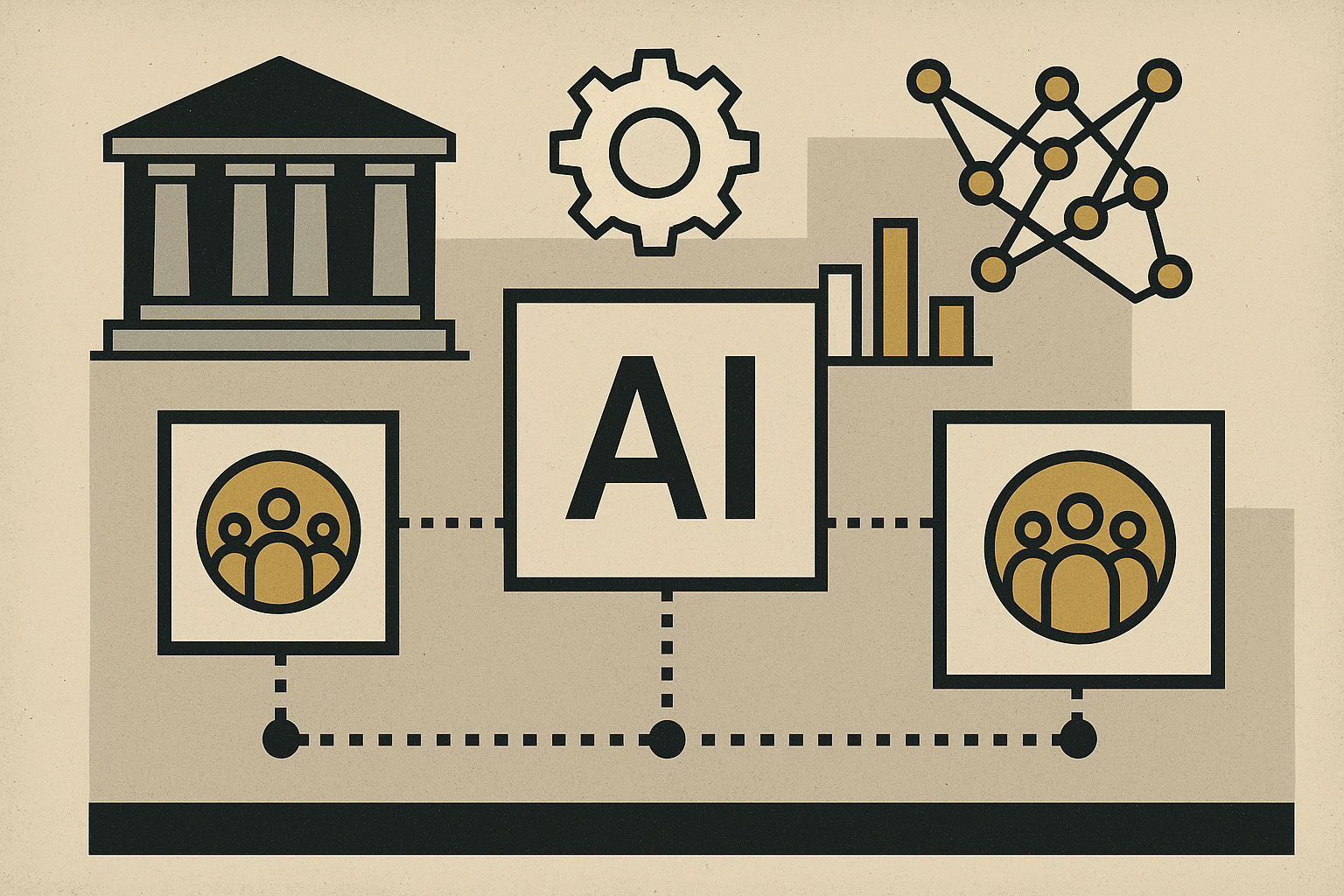
As artificial intelligence becomes central to federal modernization, the White House’s America’s AI Action Plan (2025) delivers a national strategy that federal agencies must operationalize. The plan outlines four priorities: advancing responsible AI, strengthening AI R&D, modernizing infrastructure, and building a skilled federal workforce.
Operationalizing AI Priorities
Translating these priorities into operational impact requires more than regulatory alignment. Agencies need governance structures that support experimentation, technical environments built for scalable AI, and a workforce trained to evaluate, use, and adapt AI systems responsibly.

Addressing Operational Constraints
For most agencies, AI adoption is not hindered by a lack of interest, but rather by operational constraints. Three core issues continue to slow progress: ensuring AI systems are explainable, accountable, and aligned with legal protections.
Federal agencies must embed responsible AI practices across the AI lifecycle.
Expanding AI Research Capacity
The Action Plan emphasizes U.S. leadership in foundational and applied AI, calling on federal agencies to expand their research capacity through shared infrastructure, real-world prototyping, and mission-aligned experimentation. The goal is to accelerate the development of models and workflows that directly improve service delivery, decision-making, and operational efficiency.

Modernizing Infrastructure for AI
AI systems cannot operate effectively in outdated IT environments. The Action Plan directs agencies to modernize infrastructure to support AI-specific demands, such as high-performance computing, secure data pipelines, and continuous monitoring. Infrastructure is central to governance, security, and mission delivery.
Building AI Literacy
The most advanced AI tools fall short without a workforce that can understand, evaluate, and apply them responsibly. The Action Plan stresses that federal agencies must build AI literacy across all roles, not just engineers or data scientists. There is a need to train analysts who can interpret model outputs, reviewers who can audit decisions for risk, and developers who can integrate AI systems into secure environments.

Launching Pilot Projects
The plan provides national direction, but agencies must operationalize that vision within their own missions, systems, and constraints. The first step is to launch small, clearly scoped pilot projects that explore how AI can add value within existing workflows. Early use cases should target areas where the process is standardized, the risks are low, and the gains are measurable.
Ensuring Ethical AI Implementation
To ensure these pilots are safe and effective, each must include an ethical risk review aligned with OMB M-25-21, and follow the evaluation structure provided in the AI RMF 1.0. This includes assessing potential harms, ensuring explainability, and documenting whether outputs will be reviewed by a human before any action is taken.
Human-in-the-loop control should be the default, especially in use cases that affect rights, services, or compliance outcomes.
Collaborative AI Development
AI pilots that are built by IT teams in isolation often miss critical mission, legal, or operational context. Each AI project should involve legal advisors, mission leads, policy staff, and end users from the start. Such collaboration helps clarify use-case boundaries, define what success looks like, and identify risks early.