AI is no longer theoretical for public service. In McKinsey’s 2024 survey, 65% of organizations reported regularly using generative AI, nearly double the year prior, momentum that’s now shaping state/local governments and nonprofit delivery models as well.
Why It Matters Now
While the White House’s America’s AI Action Plan (2025) centers on federal agencies, its emphasis on responsible, scalable AI should be read as a signal to all public-serving institutions, state, local, education (SLED), and nonprofits, to accelerate adoption with guardrails. The Plan’s companion OMB guidance on governance and procurement gives a concrete blueprint for getting there.
State and local agencies, school systems, and nonprofits face many of the same service pressures as federal programs: rising demand, limited staff, and high public expectations. The themes in America’s AI Action Plan (responsible AI, faster R&D, modern infrastructure, and a skilled workforce) translate directly to their missions in education, housing, workforce development, emergency management, and public health. Early adopters across the public sector already show how AI can improve access, speed, and equity.
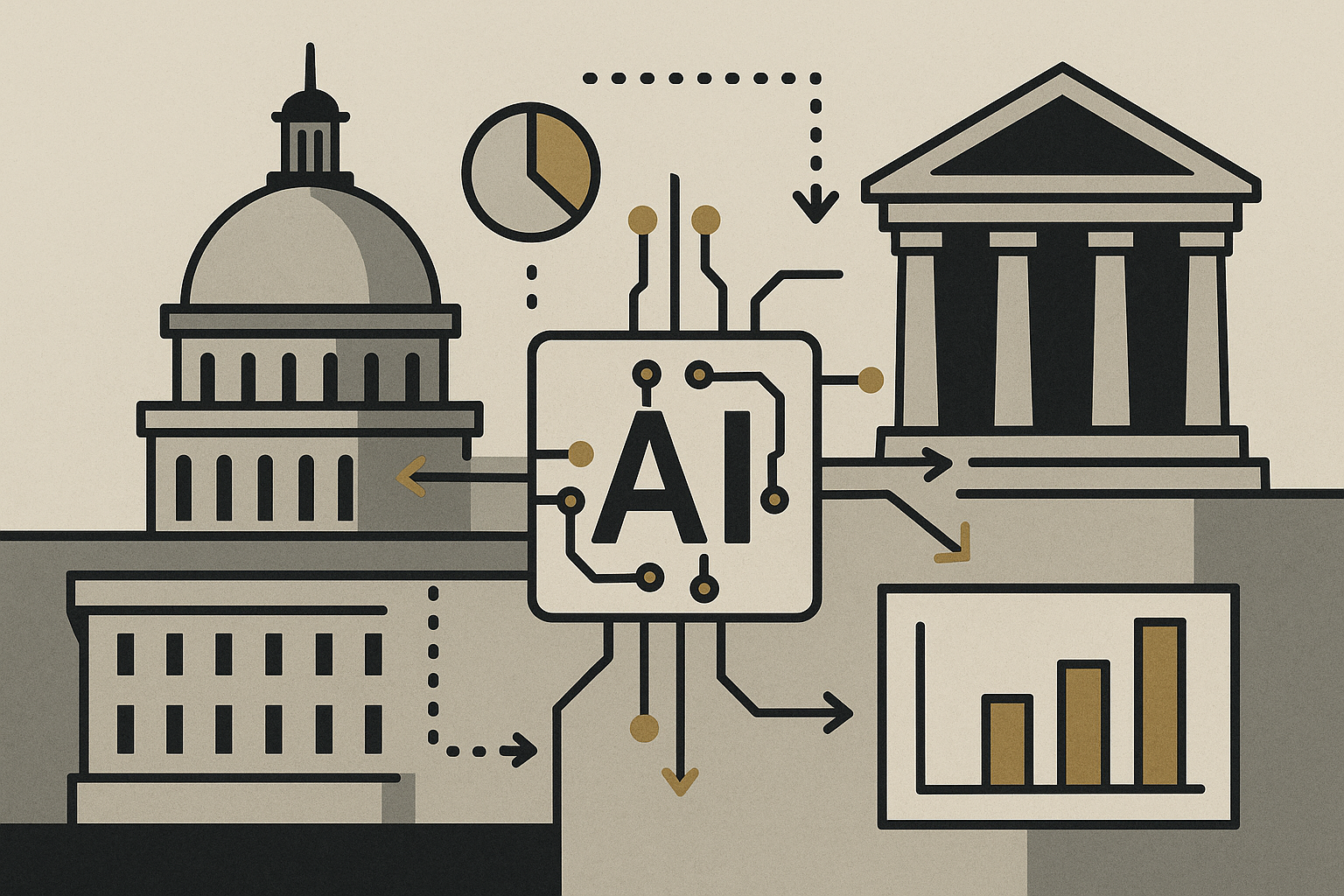
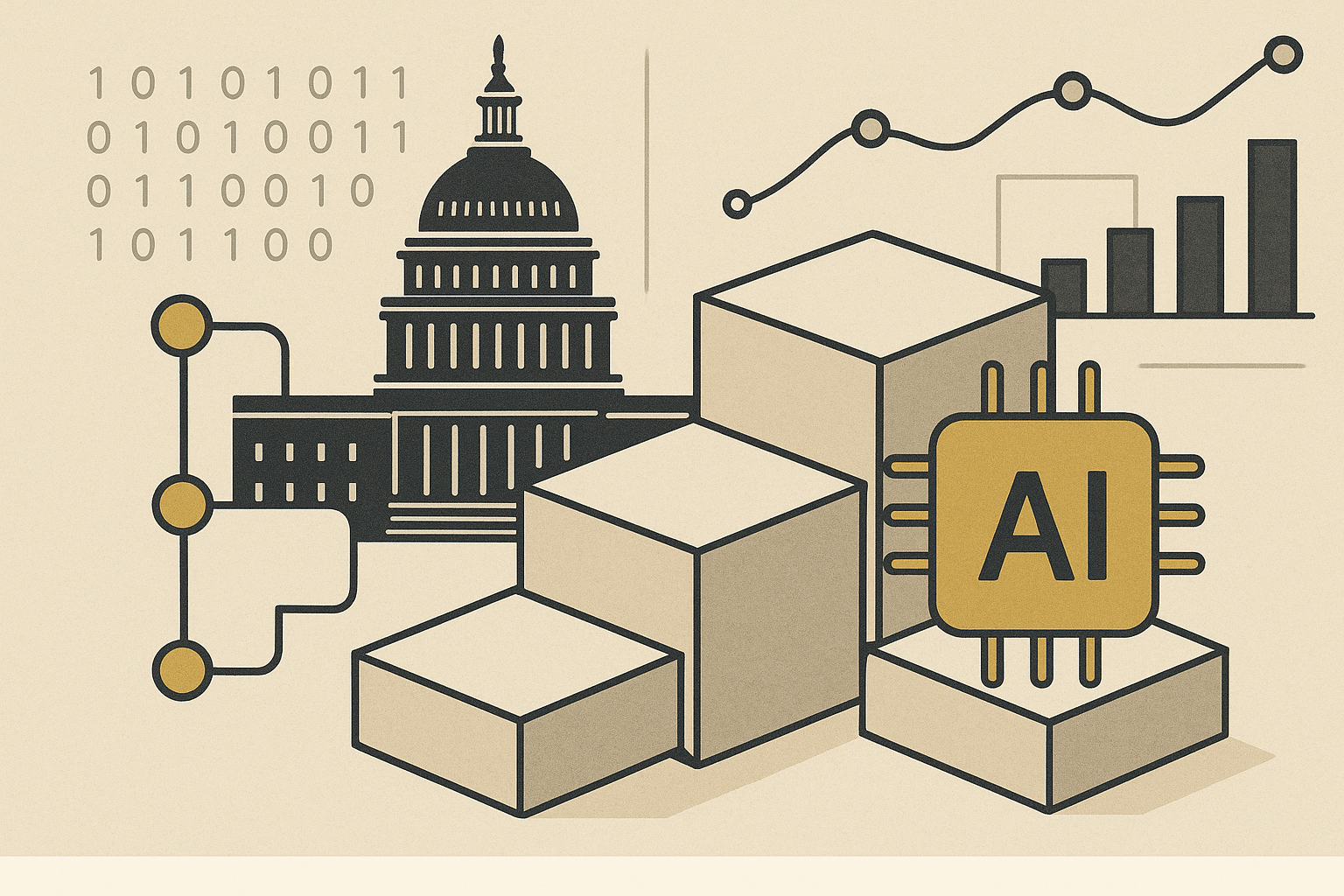
The AI Action Plan serves as a blueprint for public-serving institutions to adopt AI responsibly.
How TechSur Approaches It
Smaller agencies and nonprofits often face tight budgets, lean teams, and legacy systems. Even so, meaningful gains are within reach. By pairing AI with low-code platforms, pre-trained models, and modular digital tools, public-serving organizations can add capacity quickly, keep costs predictable, and avoid major infrastructure changes. The approach fits everyday missions, speeding case processing, improving service intake, and expanding language access, while building a foundation that can scale over time.
A practical path starts with small, low-risk pilots that sit on top of what already exists. Low-code apps can handle intake, status updates, or basic triage and connect to current case systems to reduce manual steps and shorten wait times. Pre-trained AI services for summarization, translation, redaction, and document classification can be consumed “as a service,” delivering immediate efficiency without hiring data-science teams or training custom models.
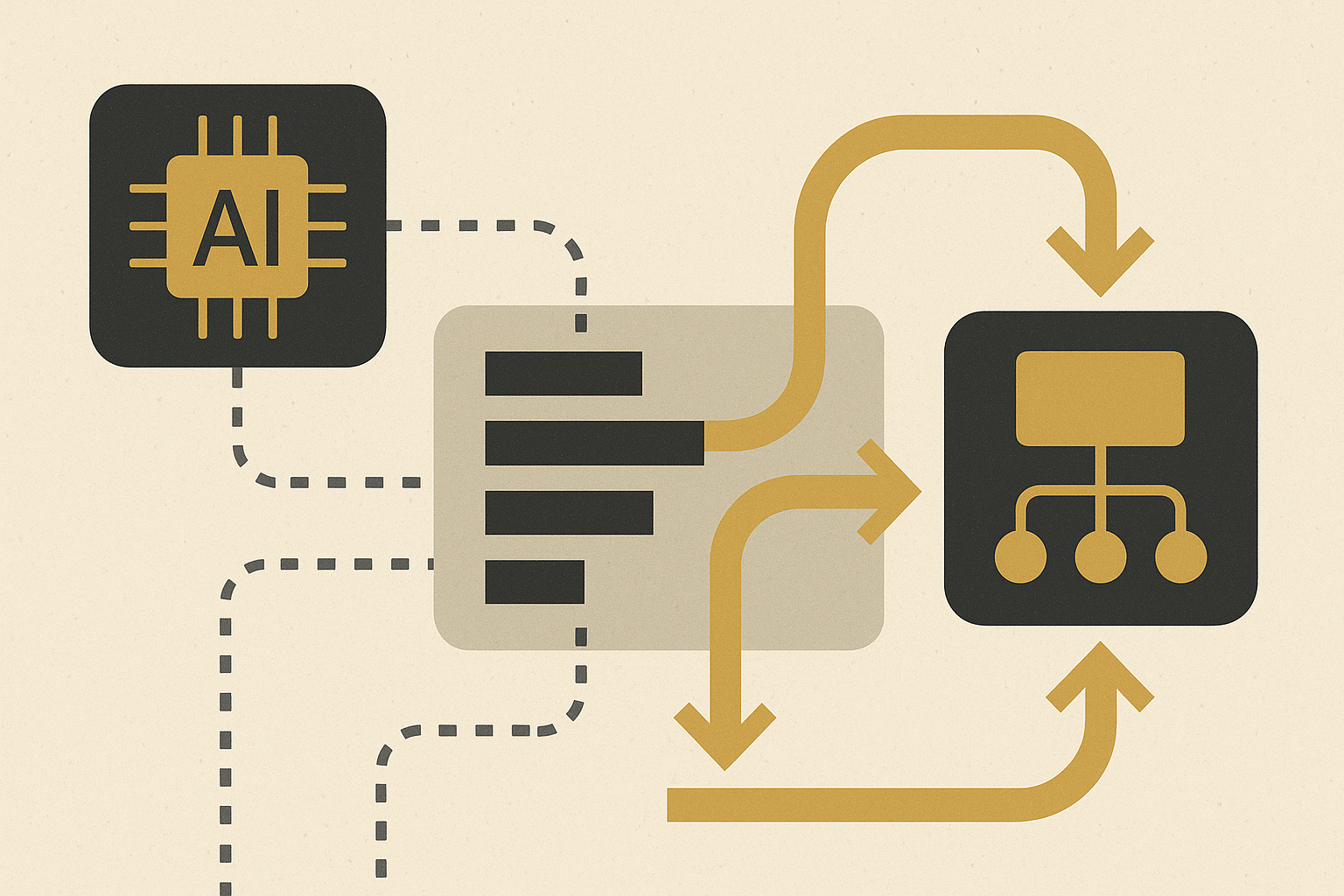
Pairing AI with low-code platforms allows public-serving organizations to add capacity quickly and predictably.
What It Looks Like in Practice
For organizations that need compute and data to prototype but lack internal infrastructure, the NAIRR pilot provides shared access to resources through the National Science Foundation, giving state universities, labs, and agencies a low-cost way to explore use cases.
Modularity keeps costs and risks in check. Instead of replacing core systems, agencies can add small services, such as translation or records-redaction, through simple interfaces and scale one use case at a time. Where possible, the same vetted service can be shared across multiple programs or neighboring jurisdictions to avoid duplication and concentrate on quality assurance.
Modularity allows agencies to scale AI use cases one at a time, minimizing costs and risks.
What to Do Next
Responsible AI begins with strong governance. Agencies should designate an accountable AI lead, establish a cross-functional review group, and clearly define decision rights across program, legal, privacy, procurement, and IT teams. The foundation is reinforced by creating a comprehensive AI inventory aligned with OMB M-25-21, capturing the purpose, data sources, human oversight, evaluation cadence, and privacy controls for each tool.
AI systems must be designed with safeguards from the start. Agencies should map mission value to measurable success criteria, selecting high-value, low-risk use cases and publishing standards for accuracy, timeliness, accessibility, and fairness before projects begin. Lightweight risk audits, guided by NIST’s AI RMF, help identify potential harms, set acceptable performance ranges, and define points for human intervention.
Strong governance and clear decision rights are essential for responsible AI implementation.